

Login
Log in if you have an account
Register
By creating an account with our store, you will be able to move through the checkout process faster, store multiple addresses, view and track your orders in your account, and more.
Create an accountReef vs. OluKai vs. Teva: Which Comfort Sandal Actually Wins?
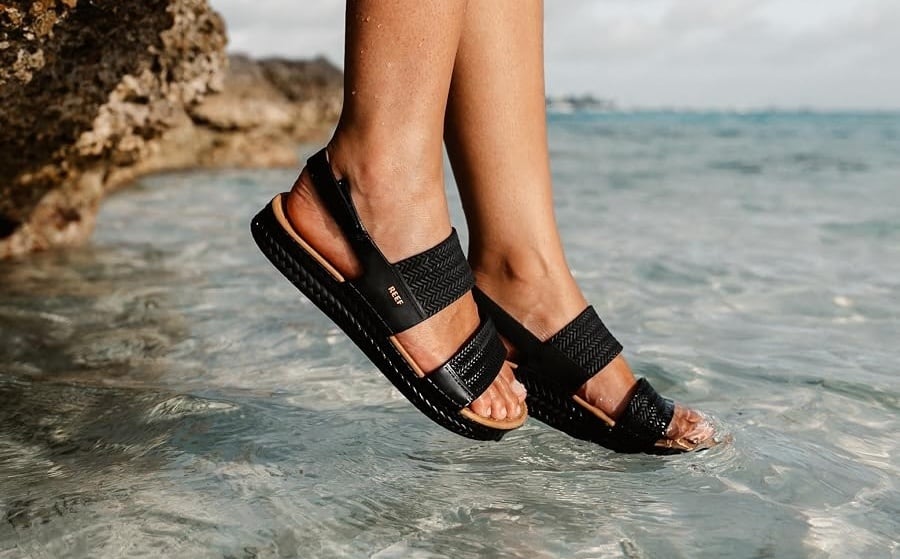
Reef, OluKai, and Teva all make a case for the same job: a sandal comfortable enough for all-day wear and tough enough to survive a Utah summer. They get there in different ways. Reef leans soft and cushioned, OluKai leans supportive and durable, and Teva leans rugged and water-ready. The right pick comes down to your foot type and what you're actually doing in them.
Reef: Built for Cushion First
Reef's whole reputation rests on footbed comfort. The brand's signature cushioning is noticeably softer underfoot than most competitors, which makes it a strong pick for anyone who wants a sandal that feels good the moment they put it on, no break-in period required. That extra give in the footbed also makes Reef a common recommendation for people managing knee or ankle discomfort, since a firmer sandal can transfer more impact with every step.
The tradeoff is that softer foam wears down faster than a denser sole, so a Reef sandal that feels incredible in month one may feel noticeably flatter by month twelve of regular wear.
Best for: casual, all-day comfort and lower-impact wear around town or at the trailhead.
OluKai: Built for Support and Durability
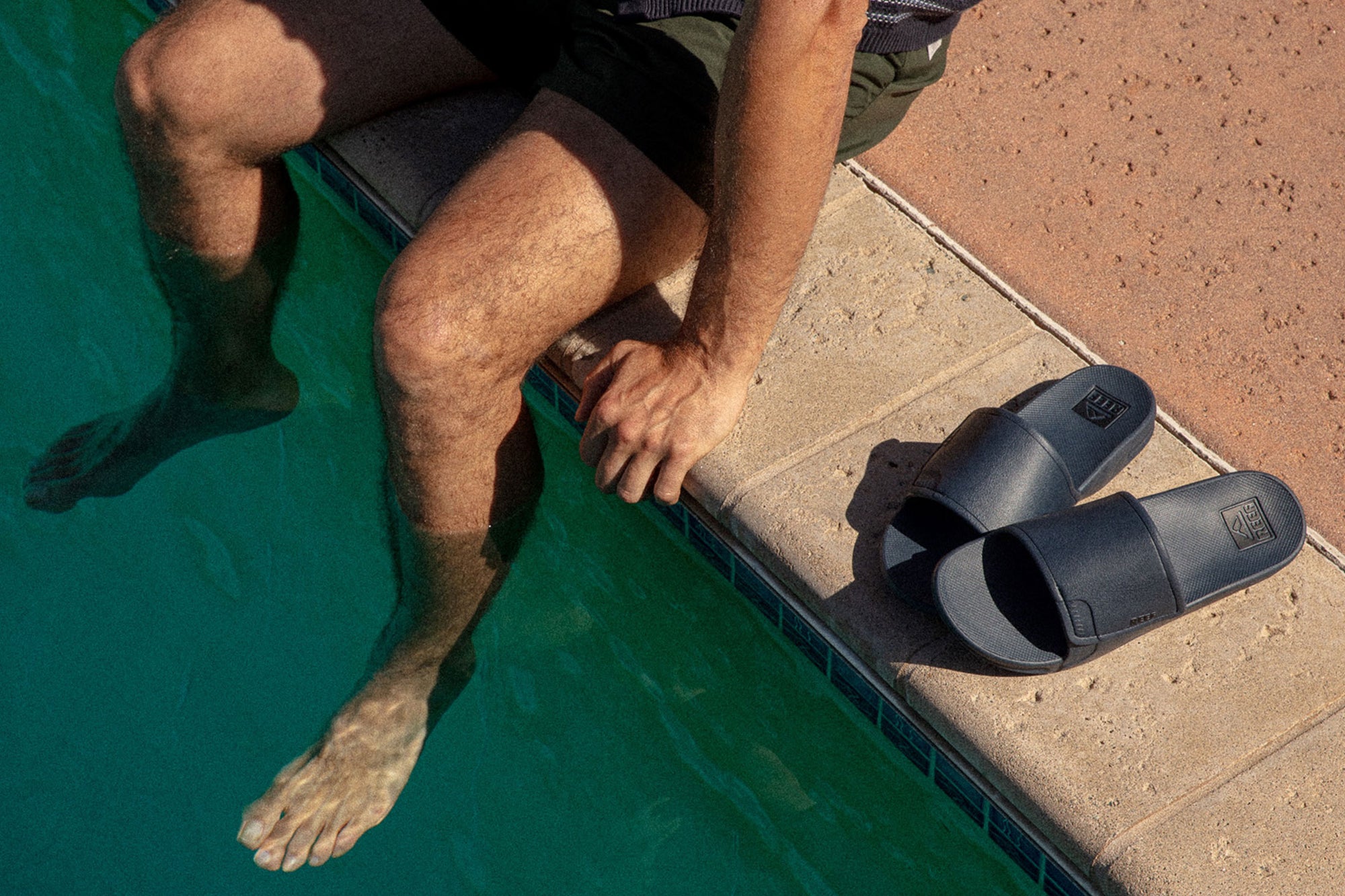
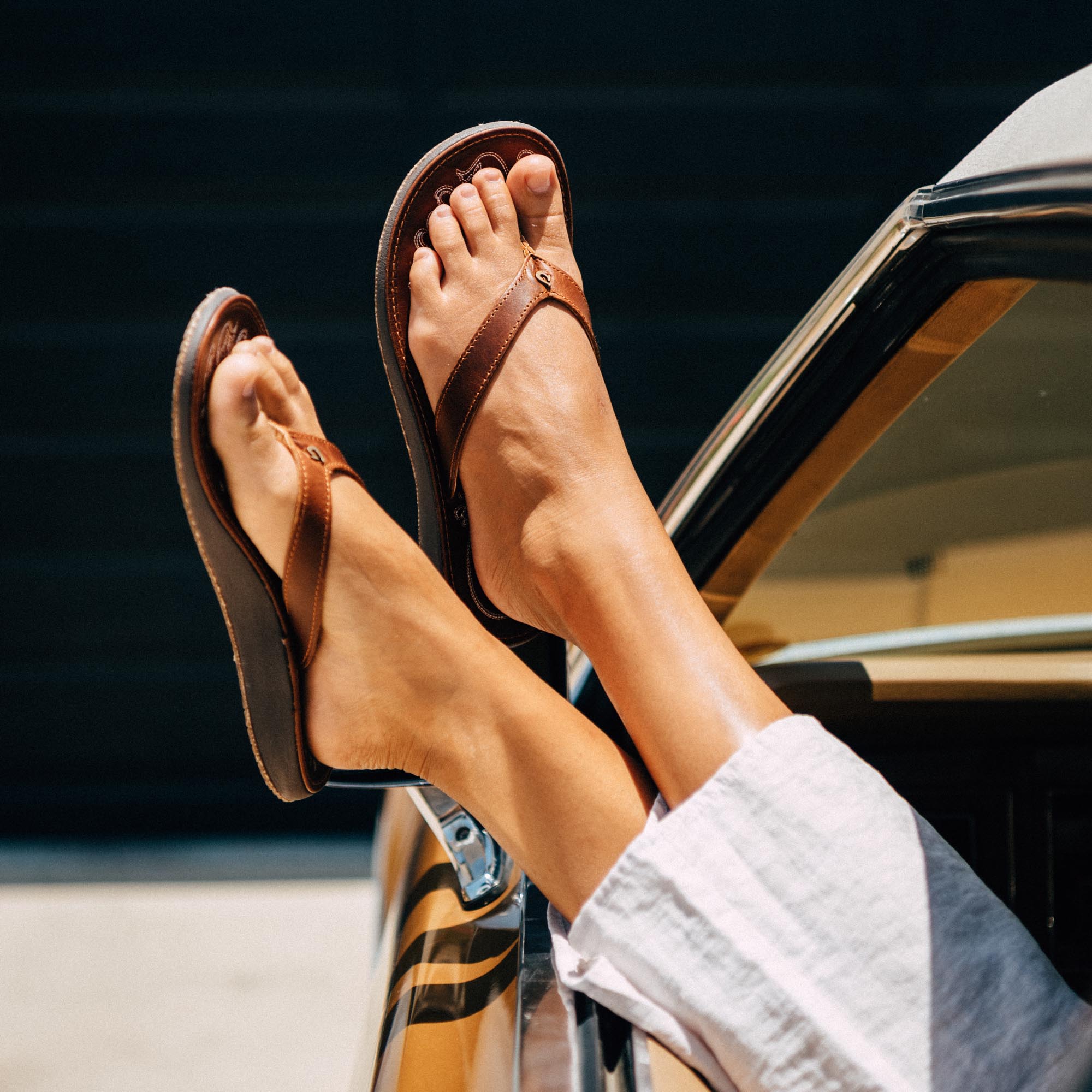
OluKai takes the opposite approach. The footbeds run firmer, with more structured arch support built into the sole rather than relying on soft cushioning alone. That structure holds up better over years of wear, and it's the reason OluKai often gets recommended to hikers and people on their feet all day who want a sandal that won't pack out.
The firmness that makes OluKai durable is also what makes it feel less immediately plush than Reef. If you're used to a soft, cushioned flip-flop, OluKai can feel stiff for the first few wears before the leather and footbed break in.
Best for: long-term durability and arch support, especially for people who log serious mileage in their sandals.
Teva: Built for Water and Trail
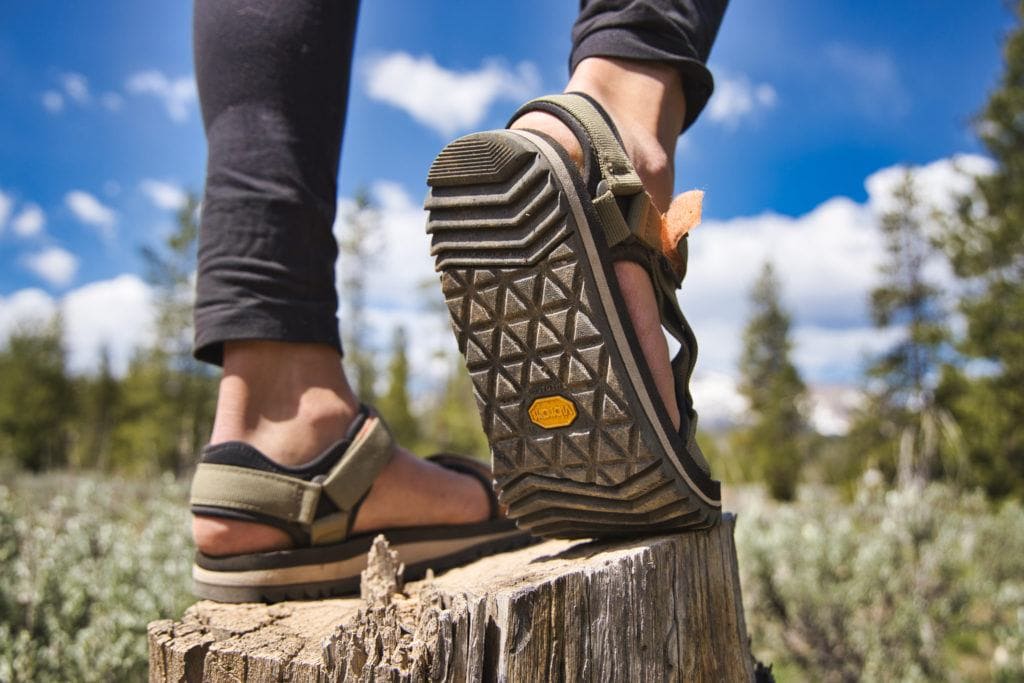
Teva's Universal Strapping System exists for one reason: to keep the sandal on your foot when everything around you is wet. That's what put Teva on the map for river guides and hikers crossing streams, and it's still where the brand separates itself from Reef and OluKai. Multiple points of adjustability let you dial in a genuinely secure fit, and the quick-dry construction means a soaked Teva is wearable again within the hour.
What Teva doesn't try to be is a dress-up sandal. The webbing straps and grippy outsole are built for function, and most Teva styles read more "trailhead" than "restaurant patio."
Best for: creek crossings, wet trails, and anywhere you need the sandal to stay on no matter what.
Reef vs. OluKai vs. Teva at a Glance
| Feature | Reef | OluKai | Teva |
|---|---|---|---|
| Footbed feel | Soft, plush | Firm, structured | Moderate, functional |
| Arch support | Light | Strong | Moderate |
| Durability | Moderate | High | High |
| Water performance | Fair | Good | Excellent |
| Break-in time | None | Some | Minimal |
Which Should You Choose?
- Want a sandal that feels great out of the box? Reef's cushioned footbed wins on immediate comfort.
- Want a sandal built to last years of daily wear? OluKai's firmer, more structured build holds up longest.
- Crossing water or hitting wet trails? Teva's strapping system is the one built specifically for that job.
- Dealing with knee or joint sensitivity? Reef's softer cushioning generally puts less strain on impact-sensitive joints than a firmer sole.
If you split time between dry singletrack and creek crossings, like most Park City summer hikers do, it's worth owning a Reef or OluKai for everyday wear and a Teva for anything with water in the plan. For hiking-specific footwear that goes beyond sandals entirely, our Salomon X Ultra 5 Mid GTX vs. Merrell Moab 3 comparison covers the closed-toe option for rougher terrain, and our piece on waterproof vs. non-waterproof hiking shoes walks through when a full shoe beats a sandal altogether.
FAQ
Which is better, Reef or OluKai?
Reef wins on immediate cushioned comfort and is easier on sensitive joints. OluKai wins on long-term durability and arch support. Neither is objectively better; it depends on whether you prioritize plush comfort now or structured support over years of wear.
Is Reef or Teva better?
Reef is more comfortable for casual, dry-land wear. Teva is the clear choice anywhere water is involved, thanks to its strapping system and quick-dry construction.
Do podiatrists recommend OluKai?
OluKai's firmer footbed and built-in arch support are frequently cited as more supportive than a typical soft flip-flop, which is why it's a common recommendation for people who spend long hours on their feet. That said, no sandal replaces custom orthotics for a diagnosed foot condition, so check with a podiatrist directly if you have one.
What sandals are better than Tevas for everyday wear?
For dry-land, all-day comfort, Reef and OluKai both outperform Teva, since Teva's webbing and outsole are optimized for water and trail use rather than all-day casual wear.
We carry Reef and Teva in-store and online, from cushioned flip-flops to trail-ready sport sandals. Browse our sandals collection to compare styles side by side, or stop by the Park City shop and try them on.